Internet intrigues me. It reminds me what humanity is capable of. How much we can build, do, in such a small time-frame: given we work together and have the resources to do it.
Okay, philosophy aside, here's how we actually did it. In the mid-20th century, scientists and researchers needed better ways to do calculations. Because before computers humans were doing all that, increasing the likelyhood of errors, and delaying even simple projects.
While the rest of the world was in chaos, US back then was relatively stable and had WAY more resources to fund everything. Also, chaotic world war and cold war times, they NEEDED to be ahead of the others. So that's what they did. They mega funded computing machines that could reliably handle complex calculations, research, and analysis. ENIAC and UNIVAC being one of the first ever 'real' computers. They came with their own basic 'OS' and were sold to public, often interesting other public and private sectors like research, engineering, government, etc. because this would make their work SO much easier.
*Fun fact: Semiconductor technology, which is essential for the logic and memory elements in computers, only came out in the 60s-70s. So early computers of 40s-50s like ENIAC/UNIVAC used older logic/memory technologies like vacuum tubes, mercury delay lines/magnetic drums, which took up entire rooms. With the advent and progress of semiconductor technologies, computers became more and more efficient, and took less and less space, basically they just got better and better. We'll soon have quantum computers, which will have the power to manipulate bits, which would make the first 'real' supercomputers.
At this point, people were already working sort of remotely. Like not from home, but sitting in different room than the actual computer. That's because these computers were too expensive to build for every single scientist to work on. So they built one per institution. And all scientists would have user accounts on the same computer. The computer was big, loud, and very expensive to maintain. So it was placed in a special, high-maintenance room, while terminals were setup in scientists' offices, connected to the mainframe via phone lines. Scientists communicated with the mainframe by using teletype, meaning, their input was converted to ASCII and sent to mainframe, and vice versa. ASCII was transmitted over phone lines using varying voltages. Back then it was all CLI. Eventually these computers
So where does the Internet come into picture?
Although these 'computing' machineswere a big step-up from the human-conducted calculations, people back then were still reluctant to mail their researches to other universities/scientists, or recite their findings over those phones, you know the ones where we stick our finger in and spin it round and round, and the phone goes 'tring tring'... you get the picture.
And this is exactly when Internet version 1.0 was born, the 'ARPANET'. The researchers came up with a pre-historic OSI model, where data would be broken into sort-of packets, and have sort-of headers attached for efficient routing and minimal data loss - a level up from sending serial ASCII over phone lines. They created early-routers called 'IMPs' that routed packets similar to how our routers do today.

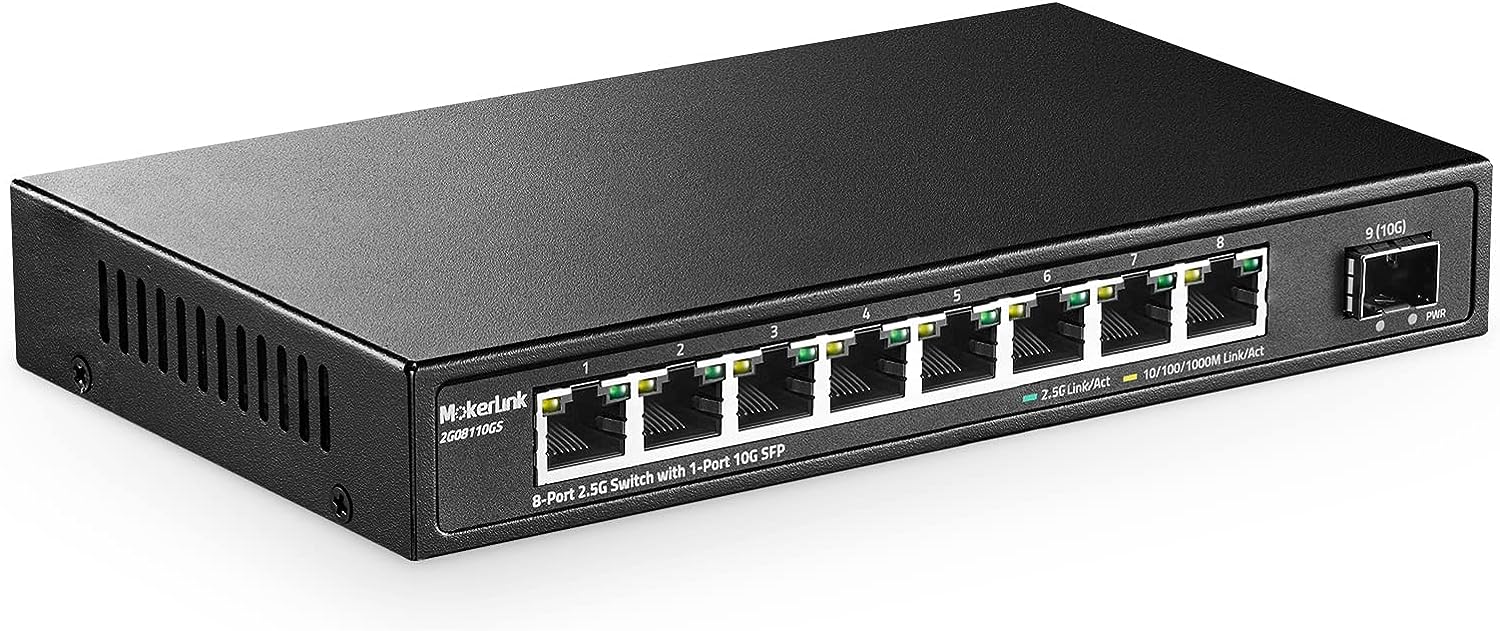
They knew just transmitting the data as serial signals over long distances (different cities) would cause data loss, and delays. Hence, they also designed hardware and software which would break down data from one computer into packets with headers so it can be routed appropriately. At first, this expensive infrastructure was only setup in 4-5 universities, so there were only 4-5 network nodes. They leased phone lines to connect the nodes in ARPANET. These universities were finally able to communicate without mailing each other papers. Eventually, more and more universities were added to the ARPANET. Copying ARPANET, others, like private telecom companies, government departments, etc. also created their networks. They were all using similar hardware and software. But they had their own routing protocols. Meaning packets coming out of one network were not intelligible to others. This was soon solved when TCP/IP came out. It standardized how data was routed, so different networks could now talk with each other. Eventually, more and more nodes/small networks joined. Point to note: these were PRIVATE networks. Meaning, even if you connected to any of these networks using a computer, you still required an account, and permissions from that network's admin to send or receive anything. TCP/IP only standardized how to send-receive raw data. Whether they actually could depended on whether they were allowed to.